



The future battlefield is changing. Advances in uncrewed systems, robotics, artificial intelligence, sensors, and autonomous technologies are creating increasingly connected and technology-enabled Defence forces.
But sophisticated technology still needs somewhere to operate, sustain and evolve.
As forces become more distributed and the pace of technological change accelerates, the ability to rapidly deploy, maintain, modify, and manufacture capability closer to the point of need will become increasingly important.
That creates an important role for deployable infrastructure.
Australian-owned Global Defence Solutions (GDS) has almost 30 years’ experience designing and manufacturing ruggedised deployable solutions for Defence and Prime Systems Integrators. Its systems provide secure, climate-controlled, and self-contained environments designed to support a broad range of operational requirements.
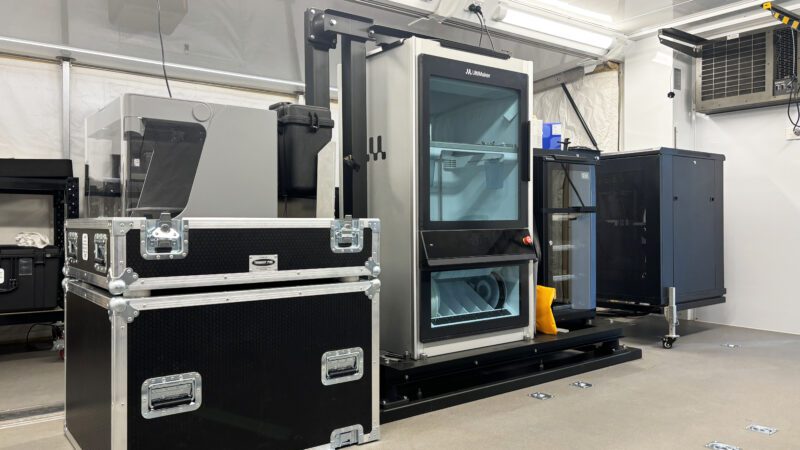
In 2025, GDS delivered the Royal Australian Navy’s first Deployable Additive Manufacturing and Repair (DAMR) capability, providing a transportable environment for additive manufacturing and repair. The experience gained across the capability lifecycle is helping inform how deployable manufacturing can continue to evolve, scale, and adapt to emerging operational needs, with potential applications across future sustainment, uncrewed systems and other advanced Defence capabilities.
As operating environments become more distributed, returning equipment to fixed facilities may not always provide the responsiveness required. Deployable manufacturing, maintenance, and technical infrastructure can bring these capabilities closer to the point of need, reducing logistics dependencies and enabling faster adaptation.
The technology within these systems will continue to evolve, but the infrastructure supporting it needs to keep pace. Providing the power, environmental control, connectivity, security, and integration required allows emerging technologies to operate effectively in demanding field environments.
“Containerised infrastructure gives Defence a flexible, transportable way to establish controlled working environments closer to the point of need,” said GDS Strategic Engagement Manager Clint Evans. “By integrating power, environmental control, connectivity, security and specialist equipment into a single deployable system, these platforms can support everything from manufacturing and repair to training, communications and operational support.”
For GDS, thinking inside the box is therefore not simply about building containers. It is about building the infrastructure that enables Defence to deploy, sustain, and adapt increasingly sophisticated capabilities wherever they are needed.